Skip to content

Happy St. Patricks Day

Happy St Patricks Day

Happy St Patricks Day

I just want to take this opportunity to wish everyone a Happy St. Patricks day. I have not cooked anything to commemorate this lovely holiday. I have a very nasty cold and have lost my sense of taste, and work has been crazy busy. I hope all of you enjoy the day, have some wonderful food enjoyed with family and friends and may you all have the luck of the Irish. I will leave you with a few gorgeous photo’s of Ireland I got off the internet. La Fhelle Padraig Sona Daoibh!

Ireland

Ireland

Irish Countryside

Irish Countryside

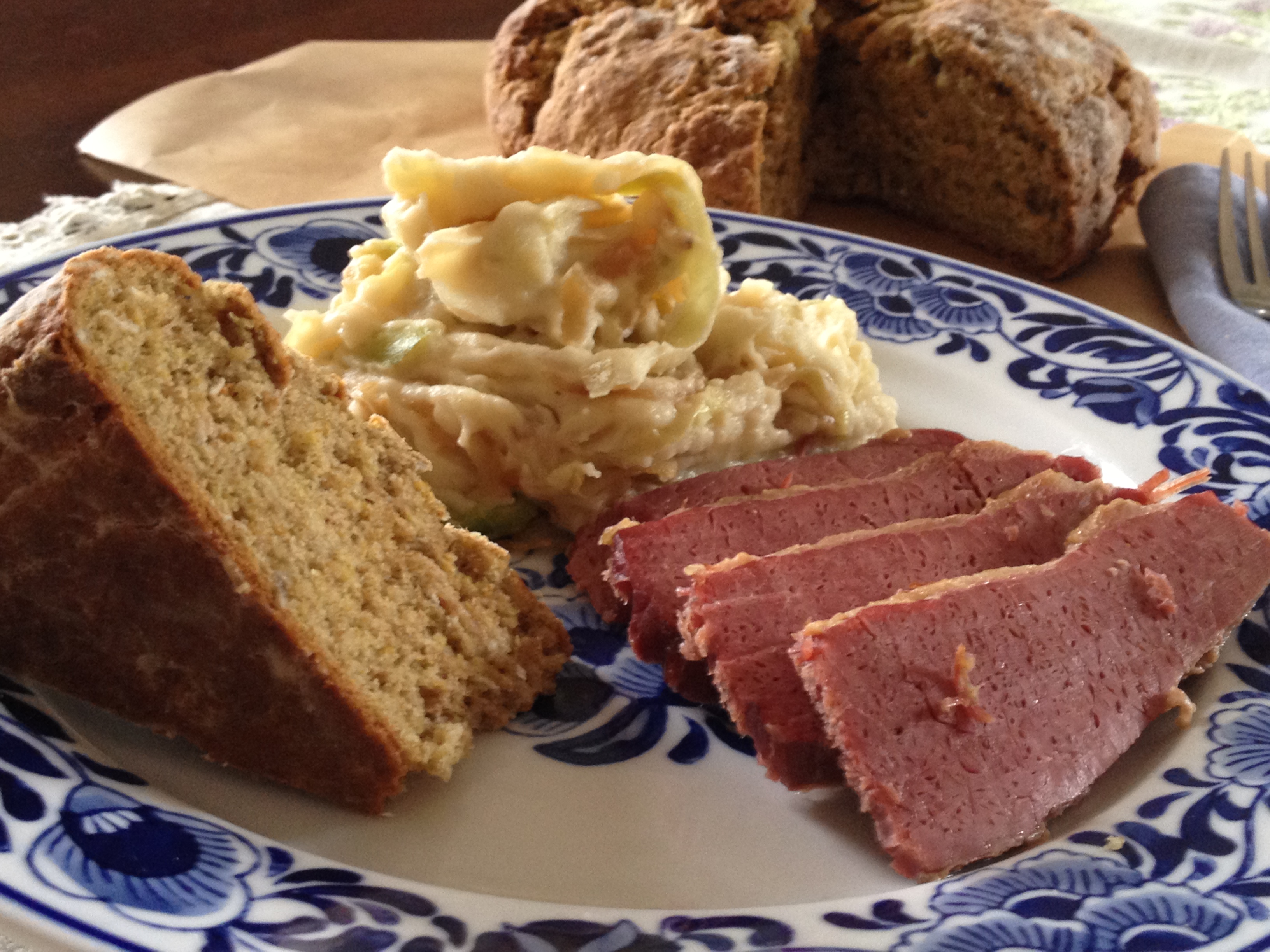
Corned beef, Colcannon, irish soda bread

Corned beef, Colcannon, irish soda bread

Blood Orange Simple Syrup

Blood Orange Simple Syrup

Blood Orange Simple Syrup

When I was at the store buying fruit and vegetables I saw some beautiful blood oranges, I love them, juiced, in baked goods or straight up. After using all but 2 I wondered what I could do with the last of my oranges. Simple syrup is something I always keep in the refrigerator, I use it for baking, drinks or spoon on fruit salad. It’s a staple item for me. The blood oranges made a beautiful and delicious syrup, a gorgeous color, and that unmistakable blood orange flavor. It’s so simple to make, taking only a few minutes. I’m saving some of it for the Semolina Olive Oil Cake, I think it would make a delicious soaking syrup. Mix it in sparkling water to make soda, you control the sweetness, it’s great in mixed drinks, Sangria, there are so many possibilities.

2 blood oranges juiced it yielded  a little over 1/3 cup

zest of both oranges

3/4 cup sugar

2/3 cup water

2 tbs honey

Place everything in a medium size saucepan, bring to a boil on high heat, when there is a rolling boil, reduce to medium/high and cook on a low boil uncovered for 10-15 minutes. The syrup will reduce a little, for a thicker syrup you would have to boil longer, 20-25 minutes.  Remove from heat, let cool and pour into a lidded jar. Refrigerate.

Pairing Desserts and Wine- Part 3 How And Why!

This is the final installment of the dessert and wine pairing series, If I had tried to put all of this in one post it would be as long as a novel, so I decided to break this up into a series of 3 posts. The first was an explanation of desserts wines and the science involved in pairing taken from Julians blog, Vino in love. Post #2 is the actual desserts and the wine recommendations,  and the third will tell you why the wines were chosen for each dish.

Below is an explanation as to why these particular wines were chosen for each dessert. Cheers!

When desserts meet wine

Only recently, I wrote about pairing wine with desserts. I have teamed up with Suzanne from apuginthekitchen to present to you awesome dessert and wine pairings. If you want to know more about the desserts that Suzanne and I picked to pair with wine then read this post on apuginthekitchen.

In the final part of this mutual collaboration, I want to talk about why I decided to pair these wines with Suzanne’s desserts.

Stuffed pears en papillote

Suzanne’s Stuffed pears en papillote pair very well with a Passito di Pantelleria. For example we could pair this dessert with the Ben Rye from Donnafugata. Why? The answers is quite simple. The pears are steamed in brown sugar and stuffed with walnuts. Sweet desserts like this one call for a wine that has a good amount of sweetness itself. It should not be overly sweet though. Furthermore, the Ben Rye has a bouquet that includes candid oranges, which pair with pears en papillote very well.

Trabucchi d’Illasi’s Recioto di Soave is a great match for a fig and goat cheese tart. The flavor of the figs and the aromas of the Recioto di Soave (elderflower, chamomile, white chocolate, aromatic herbs, etc.) pair well together. This Recioto is also not that sweet. We also need a wine with an ABV between around 10% and 13.5%. A Passito di Pantelleria would be too intense and also too strong. That would cause the wine to dominate the dessert, which we want to avoid. The Recioto di Soave however, is a very elegant wine. It has an ABV of 12.5% which is perfect for this dish.

Ceretto Asti SpumanteThe buttermilk panna cotta called immediately for a Moscato d’Asti Spumante. Moscato d’Asti Spumante are sweet, fruity and usually have a very low ABV (often around 7%). These wines have a little bit of acidity as welll. And with pannacotta we want exactly that. The Moscato d’Asti Spumante from Cerotto has a good quality-price ratio and is the perfect match for Suzanne’s buttermilk panna cotta.

Pasticciotti filled with vanilla cream are a traditional dessert from Apulia, Italy. These delicious pastries also call for a sparkling wine and why not pair Apulian food with Apulian wine? Sometimes it is best to go with food and wine from the same region. Therefore, I decided to pair Suzanne’s Pasticciotti (you have to try them! They are so tasty!) with a Moscato di Trani Spumante. Pasticciotti are dry and pretty sweet. One of my favorite Moscato di Trani Spumante is produced by Azienda Agricola Franco di Filippo. Both of their Moscato di Trani Spumante will work excellent with Pasticciotti. These “Champagne-like” sparkling wines (“Champagne-like” because they are manufactured after the Classic-Method process) have a long-lasting perlage, an intense nose and a great palate. They tend to have less acidity then Moscato d’Asti Spumante. However, Moscato d’Asti Spumante are usually produced after with Martinotti-Method and not with the Classic-Method.

Recioto della Valpolicella - Trabucchi d'Illasi

Trabucchi d’Illasi does not only make a stunning Recioto di Soave but also an even better Recioto della Valpolicella. Recioto della Valpolicella is produced similar to Amarone. Grapes get sun-dried for around 40 days on straw-mats where they lose around 80% of their weight. This gives Trabucchi’s Recioto della Valpolicella a rich nose and an intense palate. The nose is incredible with a lots of different aromas. The finish is persistently long. I have baked Suzanne’s semolina olive oil myself and served it with Trabucchi’s Recioto della Valpolicella. A good match which I highly recommend.

Last but not least I paired the spicy chocolate panna cotta with aCognac. I am of the opinion that chocolate desserts like chocolate panna cotta or chocolate cake do not pair well with wine. A Portuguese Port wine would have worked as well but with these type of desserts your best bet are spirits like Brandy and Cognac – in fact Cognac is a type of Brandy from France. If matching chocolate desserts with alcohol then you have to go with strong spirits. Of course, we could also serve this delicious dessert with an espresso which would be the “Italian way”.

Photo Credits: Stuffed pears en papillote by Suzanne. All rights reserved
Ceretto Asti Spumante by Ceretto 
Recioto della Valpolicella – Trabucchi d’Illasi 
by Julian Rossello. All rights reserved.

This brings our dessert and wine pairing series to an end. I hope you have enjoyed it. Let me know what you think about these pairings. With what do you pair your favorite dessert usually with?


Pairing Wines With Dessert Part 2

When Julian from Vino In Love  and I first started talking about dessert wines and pairing wines with desserts I was so excited and thrilled that he agreed to collaborate with me on this. I sent him a list of desserts that I posted here on my blog and asked him to pair wines or spirits with the desserts. Here is the list and I can’t wait to try each of these. I am learning a lot from the wine experts that I am now following and I look forward to each of their posts. All of the desserts below are featured on my blog, to get the recipes just click on desserts on the category cloud. I didn’t include the recipes on this post because this is about the wine that you would eat with the dessert. You can pair the wine below the photo with a similar dessert without using the exact recipe. To locate these wines you can use this handy dandy tool http://www.wine-searcher.com/ or do like I do, contact your local wine merchant and see if they have them, if not, hopefully your favorite wine shoppe is as wonderful as mine and they can locate these wines for you. Below is the photo of the dessert and Julian’s excellent recommendations. Thank you so much Julian for helping me with this it was so much fun and a real learning experience for me and I hope for all those that follow my blog. Thank you!

Baked Pears

Baked Pears

Stuffed pears en papillote + Donna Fugata – Passito di Pantelleria (intense white sweet wine from Sicily) More info on Donna Fugata: http://www.donnafugata.it/pagine/Homepage.aspx

Mosto Cotto Fig And Goat Cheese Tart

Mosto Cotto Fig And Goat Cheese Tart

Fig and goat cheese tart + Trabucchi d’Illasi – Recioto della Valpolicella (red sweet wine from Veneto. Produced like Amarone but tastes even better.) More information: http://vinoinlove.com/2006-trabucchi-dillasi-amarone-della-valpolicella-doc/

Buttermilk Panna Cotta

Buttermilk Panna Cotta

Buttermilk panna cotta with mosto cotto Champagne grape syrup  + Ceretto – Moscato d’Asti (light, sweet sparkling wine from Piedmont. More information on Ceretto: http://www.ceretto.com/

Pasto Ciotti

Pasti Ciotti

Pasticciotti filled with vanilla cream + Moscato di Trani or with a Passito di Trani (Sweet (sparkling) wine from Apulia; the same region where Pasticciotti are from). Here is a link for information on the wine: http://www.wine-searcher.com/regions-moscato+di+trani

Semolina Olive Oil Cake

Semolina Olive Oil Cake

Semolina olive oil cake +  Trabucchi d’Illasi – Recioto di Soave (white sweet wine from the Veneto) Here is more information on this wine from Julians site: http://vinoinlove.com/2006-trabucchi-dillasi-recioto-di-soave-recioto-di-soave-docg/

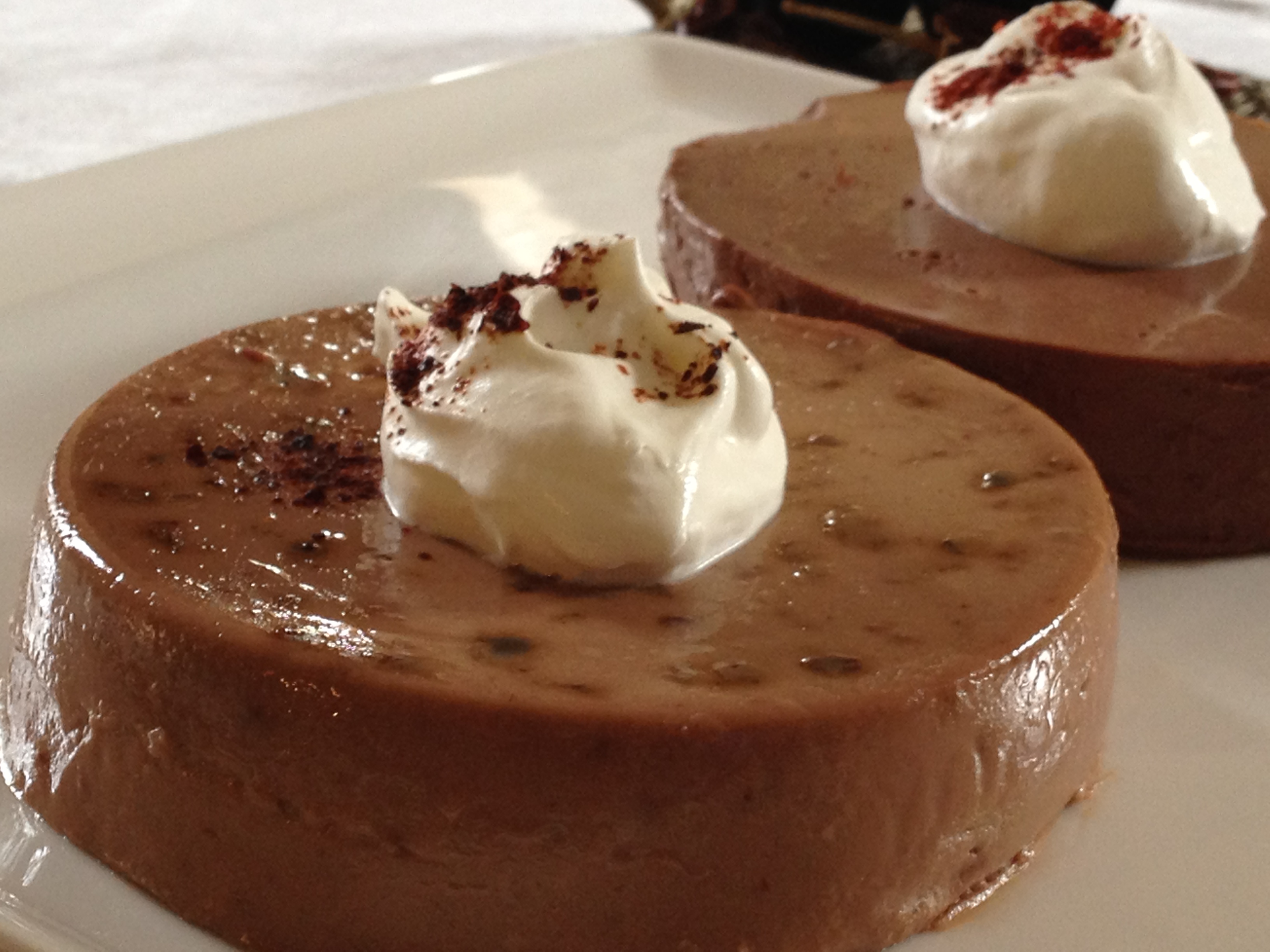
Fire On Ice Light and Dark Chocolate Panna Cotta

Fire On Ice Light and Dark Chocolate Panna Cotta

Spicy chocolate panna cotta + Cognac (Brandy from France) NOTE from Suzanne: I am so glad that Julian paired this with cognac, I have been doing something right. I like to serve cognac with this type of dessert, I have Pierre Ferrand Cognac (It’s wonderful with this).

Guest Post- Desserts And Wines Part One

I have been following several blogs about wine, I am sure your remember the wonderful wine pairing from Stefano of Clicka and Corks and Flora’s Table. Another wine blog that is full of information is Vino In Love, Julian Rossello is a wine expert and is like an encyclopaedia of wines and wine history. I love his quizzes although I don’t even attempt to answer the questions, but I do look forward to reading the answers when they are published. Julian and I were talking about dessert wines or pairing desserts with wines, it’s a complex subject and one that I find very interesting. Do you have wine with your dessert? Well. if you are like me, you don’t have a clue what wines you would serve with dessert. Champagne is what I am usually have if an alcoholic beverage is offered.  Julian is here to demystify the science of pairing wine with dessert or serving a dessert wine. I hope you find this as interesting as I do and stay tuned for Part Two, I have asked him to pair wines with several desserts. I can’t wait to see what he has for us. Click on the link to visit Julians great wine blog and follow him on google+.  I know you will enjoy it as much as I do.

Desserts and wine: The right choices

2006 Trabucchi d'Illasi - Recioto - Recioto di SoaveEvery since their existence, dessert have been used to celebrate birthdays, weddings and other special occasions. In many countries, desserts get also served after dinner. If you are the host of a such a dinner then you have to ask yourself: “What wine should I pair with the dessert?” Should you pick a wine at all or is it better to go with something else? It is said that desserts are the most difficult to pair with wine. This guide will help you to make the right choices.  But remember, these are general rules and there are always exceptions. The guide will focus mostly on recommendations for traditional Italian desserts.

Let’s start with a common mistake that should better be avoided. Never pair dry wines with any type of dessert. Sadly it is a habit to match desserts with dry sparkling wines (extra brut). Why should this be avoided? Dry wines tend to destroy the wine’s flavors and we do not want that to happen. An exception are passtito-style sparkling wine that are especially common in Apulia.

There are three factors to consider when looking for the right wine.

  1. Intensity – Intense wines call for rich desserts or for no dessert at all.
  2. Sweetness – The wine should always be sweeter than the dessert.
  3. Acidity – Acid wines tend to pair well with fruity desserts, which have a natural acidity.

Sweet bread loafs and foccaia dolce

Italy is famous for its sweet bread loafs. The Italian cuisine has three important types of sweet bread loafs. The first one isPandoro, which is a traditional yeast bread loaf from Verona. Pandoro is most popular around Christmas. Colomba PasqualeA similar sweet bread isPanettone, which originated in Milan. Last but not least, there is Colomba Pasquale. This Easter cake is the counter-part to Panettone and Pandoro. It is also my favorite type of sweet bread loaf.

Focaccia is a flat Italian bread. Usually it is seasoned salt, herbs and olive oil but also sweet versions exists which are known as focaccia dolce.

Let’s focus on wine. Both, focaccia and sweet bread loafs, are characterized by their sweetness and succulence. Furthermore they are not intense and rather dry. If served together with candid fruits, dried fruits or almonds then the dessert is also characterized by its spiciness. Therefore, these desserts call for fruity, sparkling white wines like Moscato d’Asti DOCG. Moscato d’Asti is a sparkling wine from Piedmont. The wine is produced with 100% Moscato Bianco grapes and is known for its fruity sweetness and low alcohol level.
Alternatively, Pantelleria Moscato Spumante DOC could be served with these desserts. Pantelleria Moscato Spumante is a sweet sparkling wine from the tiny island Pantelleria. Here we have 100% Zibibbo grapes (same grapes that are used for Passito di Pantelleria). The wine is characterized by a fine, long-lasting perlage. The bouquet has aromas of fresh fruit. On the palate, the wine is sweet and the finish is long. Pantelleria Moscato Spumante has a higher ABV than Moscato d’Asti.

But beware, if the Colomba is stuffed with chocolate, vanilla cream or zabaione then these wine pairings will not work very well. To be safe, you should settle for sparkling water instead.

Tiramisù, mousse, semifreddi & bavarian cream

Semifreddo al pistacchio

Semifreddo refers to a variety of semi-frozen desserts like parfaits or certain fruit-tarts. The picture to your left shows a pistachio-semifreddo.

Tiramisù in the traditional way is a dessert that consists of layers of ladyfingers dipped in coffee (and sometimes with Marsala wine) with powdered chocolate and mascarpone cheese cream. Throughout history the recipe has been adapted many times into puddings and cakes. For our wine pairing, it is important the the tiramisù is prepared without alcohol.

Bayerische CremeBavarian cream is a rich custard set. This classic dessert originated in Bavaria, Germany. Main ingredients are pastry cream and gelatin. The dessert is often served with fruits. On the right, you see bavarian cream with sliced fruit and a red-berry fruit sauce.

Mousse is of French origin. There are many varieties of mousse. But all consists of whipped egg whites. Some are flavored with chocolate and others with fruits. For this wine pairing, we are only interested in fruity ones. For example a peach and mint mousse.

So what wine pairs well with these desserts? Here we are looking for sweet wines (not overly sweet) with a rather high ABV. Elegant, noble wines with intense aromas. The wines should be produced from white grapes only. Recioto di Soave and Recioto di Gambellara will work very well. The Recioto di Soave from Trabucchi d’Illasi is highly recommended. Below you find an excerpt of my tasting notes for it.

On the nose there was a heavy aroma of wild flowers – especially chamomile and elderflower, lots of white chocolate and a few aromatic herbs. An incredibly elegant bouquet, which made me even more excited to take a first sip. A very noble wine with notes of honey and caramelized white fruit (apricot, peach, etc.). ‘Recioto di Soave’ was well-structured and of good balance. The finish was long. Once again, elegant describes the palate best. 

Mille-feuille

MillefoglieMille-feuille is a pastry of French origin. It is extremely popular in Italy where it is known as “Millefoglie”.  It is made up of three layers of pâte feuilletée, alternating with two layers of crème pâtissière.

Mille-feuille and similar desserts pair well with Recioto della Valpolicella. Again, I can very much recommend a wine from Trabucchi d’Illasi. Their Recioto della Valpolicella is world-changing. It has been chosen as the best Italian red wine by reputable wine critic Luca Maroni. I do not know any other wineries that produces that many high-quality wines like Trabucchi does. With a mille-feuille, we could also go for a Moscato d’Asti DOCG. These sweet sparkling wines tend to pair well it. A few other wines that are produced from Muscat grapes work as well.

Chocolate-based desserts

Chocolate-based desserts like chocolate cakes and chocolate mousse do not pair well with wine at all and they are therefore the hardest desserts to pair with wine. Only wines with a very high ABV tend to pair decently with them. Examples – Port wine,Sherry and Madeira. But in all honesty, do not pair chocolate desserts with wine. Trust me. Aged digestives like Armagnac andGran Marnier are a better choice.

Biscotti and other cookies

Vin Santo con cantuccini: sweet wine & dessert matchBiscotti, also known as cantuccini, are Tuscan cookies that originated in the town of Prato. Biscotti are dry almond-cookies. They are among the most traditional Tuscan desserts. These cookies are among my absolute favorites. They pair extremely well with Vin Santo. The name literally translates to “Holy Wine”. Vin Santo is traditionally produced in the Chianti Classico area. The wine is known for its amazing amber color and intense flavor.

Passito di Pantelleria, like the Ben Rye from Donnafugata, works also with biscotti but if you want the true traditional Tuscan experience then you have to go for Vin Santo. Let me know if you enjoy this dessert & sweet wine pairing as much as I do.

Cannoli are a Sicilian pastry dessert. They are tube-like cookies that are filled with sweet, creamy ricotta. They pair well with Moscato di Pantelleria.

Amaretti are more difficult to pair with wine because they are prepared with an almond liquor known as Amaretto. If I had to recommend a wine then I’d go with an Alta Langa spumante rosato DOCG. The pink sparkling Alta Langa wines usually have a fine, long-lasting perlage. On the nose, vanilla, yeast and fresh baked bread. The palate is well-structured and the wines tend to have a lingering finish.

The “no-food” solution

There are certain high-quality wines that make up a fantastic “dessert” by themselves. Examples are German Eiswein and Recioto della ValpolicellaIf you ate too much for dinner but still want something sweet afterwards then these two sweet wines will do the trick.

Eiswein is a very sweet wine that can age for decades. Young Eiswein tends to be rather acid so go for aged one. The Riesling grapes for Eiswein are usually harvest at the beginning of December at temperatures below -6°C (21° F)

Recioto della Valpolicellais considered to be one of the best wines in Italy if not of the World. I already mentioned earlier that it pairs well with certain desserts but more important is that Recioto della Valpolicella is so delicious that it is best enjoyed by itself.

Parmesan cheese

Parmigiano Reggiano: sweet wine & dessert matchOften after dinner many people prefer a variety of cheese and not something sweet. If you are one of them then Parmesan cheese is the way to go. Serve with balsamic vinegar creme drizzeled on top.

Parmesan cheese (Parmigiano Reggiano) has its origin in the Emilia-Romagna, Italy. It is a hard granular cow-milk cheese, which ages very well. According to European and Italian law, only cheese from the provinces Bologna, Modena, Parma and Reggio-Emilia is allowed to call itself Parmigiano Reggiano. Should you find the cheese to be too expensive then go with a Grana Padano.

The cheese pairs very with all kinds of Passito and Recioto. Moscato and many other sweet wines can be served with Parmigiano Reggiano as well. Parmigiano Reggiano is the perfect cheese to pair with your favorite sweet wine. Not recommended with sparkling wines.

Update March 7th

Because many people have said that they enjoy red wine with dark chocolate, I want to inform you that this post is only about pairing desserts with (sweet) wine. And chocolate desserts like mousse a chocolate or chocolate cake certainly don’t pair well with red wine. Dark chocolate on the other hand can be served with a glass of red wine but beware that many people will still not like it.

Parting words

I will leave you with these dessert & wine pairings.  This guide is by no means complete because there are so many desserts but I hope that it helped you understand the process of pairing desserts with wine.What is your favorite sweet wine and with what do you usually serve it? Should you have any questions then simply leave a comment or send me a tweet.

Photo credits:

  1. Colomba Pasquale by Wikipedia with a CC 3.0 license
  2. Semifreddo al Pistacchio by Christian with a CC 2.0 license
  3. Mille-feule by Academiabarilla with a CC 3.0 license.
  4. Parmigiano Reggiano by Sputnikcccp with a CC 3.0 license.


Retro Recipe Redux-Chicken And Dumplings

Chicken And Dumplings

Chicken And Dumplings

Retro recipes fascinate me and this is one I have been meaning to re-create. Honestly, I never had it growing up but had heard about it and always thought it sounded delicious. When Food52 announced the latest contest, Your Best Cheap Feast, I felt this recipe fit perfectly. Chicken and Dumplings was created sometime during the Great Depression and was a great way to feed a family for very little. You basically have a big pot of chicken soup that you drop biscuit dough in and this creates a thick and hearty stew. I updated the dumplings by adding herbs and lemon zest, this gives another layer of flavor. There was leftovers, both the biscuit dough and the stew and I repurposed by making a couple of pot pies, I added some frozen peas, put in a ramekin and covered it with the dough, this was meal number two. The whole meal cost less than $20 and when broken down it’s less than $5 a person. Good food on the cheap!!

Serves 6-8 depending on serving size

The Chicken And Vegetables:

  • 1 whole chicken approx 3-5 lbs
  • 8-10 cups water (If you happen to have stock you can use that instead of water)
  • 2 carrots peeled and sliced into rounds or at an angle
  • 1 large onion chopped into small pieces
  • 2 stalks celery sliced
  • 1 parsnip peeled and sliced into rounds or at an angle
  • salt and pepper to taste
  1. Wash the chicken and place in pot or dutch oven, pour in water, season and bring to a boil on high, reduce heat to med/high and low boil until chicken is tender, it takes approximately 1-2 hour. Note: If using water I boiled the chicken for about 2 hours so that the broth is tastier.
  2. Remove chicken from pot and set aside to cool, pour broth into a container. Add a small amount of olive oil to the bottom of the pot, add the onion and saute until they soften, add the celery, carrot and parsnip and saute until the vegetables begin to soften. The onion will be translucent. Add the broth back in the pot and simmer for approximately 30-40 minutes, just until the vegetables are tender.
  3. While the vegetables are cooking in the broth remove the meat from the chicken, remove the skin also and set aside covered and start the biscuit dough.

The Dumplings And Finishing The Dish:

  • 2 cups all purpose flour
  • 1 tablespoon + 2 tsp baking powder
  • 1/4 teaspoon salt
  • 1/2 cup cold vegetable shortening
  • 2 tablespoons cold butter (I used salted but unsalted is fine)
  • 1 tablespoon snipped chives
  • 1/4 teaspoon dried thyme
  • 1/4 teaspoon dried marjoram
  • 1 teaspoon lemon zest
  • 1 cup milk (whole is preferable but 1 or 2% is fine)
  1. In mixing bowl combine the flour, baking powder, salt, herbs and lemon zest, cut in the vegetable shortening and butter until it resembles peas. Add the milk and mix just until combined. Turn out onto a lightly floured work surface, knead for a minute or two and pat into a disc approximately 1/2 inch thick. I use the smallest biscuit cutter or a cordial glass and cut into small round shapes.
  2. Bring the broth and vegetables to a boil and drop in the dumplings, Don’t over crowd as you don’t want the dumplings to absorb all the liquid (you can always bake the remaining biscuit dough or make pot pies from the leftovers). Boil the dumplings in the broth for approximately 10-15 minutes they will thicken the soup substantially and will partially break down a bit.
  3. Season to taste with salt and pepper, add the chicken and serve. I like to garnish with chopped parsley.
Chicken and dumpling pot pie

Chicken and dumpling pot pie

Alice Medrich Cocoa Brownies- Food52 Genius Recipe

Brownies

Brownies

I talk about Food52 a lot, it’s a site I love, am active on and have met some really great people through. I previously posted the genius recipe for caramelized white chocolate, I really love that recipe. Today, Kristin Miglore one of the editors from Food52 posted a recipe for Cocoa Brownies by the great Alice Medrich. I immediately set out to make these brownies, you see I have been wanting to find a brownie recipe for quite a while that just uses cocoa powder, well here it is, and I am very excited.

The recipe is simple to make and yields a moist, rich brownie, I thought that a glaze would be nice, I  didn’t want a thick icing, just a hint is all thats needed, so I mixed some Kahlua with butter and confectioners sugar, chocolate and coffee are a very happy match in my opinion, Well these brownies are tremendous and if you are a fan of chocolate and brownies you will love this recipe and I wanted to share this you. I am including the headnote with the recipe. Enjoy!!

This recipe is one part of a master brownie recipe Medrich designed to use whatever chocolate you have in the house — but the best version happens to be the one that only requires cocoa powder. By taking out the chocolate, with its inevitable fat and almost-inevitable sugar, Medrich was able to control and fine-tune the proportions of both. When she added back in the fat (via butter), the middles stayed softer. When she added back in granulated sugar, the crusts were shinier and more candy-like. Any cocoa will work, but natural (not Dutch process) will taste more richly of chocolate. Recipe adapted slightly from <strong><a title=”Amazon: Bittersweet” href=”http://www.amazon.com/Bittersweet-Recipes-Tales-Life-Chocolate/dp/1579651607/?tag=food52-20“>Bittersweet</a></strong> (Artisan, 2003)

Makes 16 large or 25 smaller brownies

  • 10 tablespoons (1 1/4 sticks) unsalted butter
  • 1 1/4 cup sugar
  • 3/4 cups plus 2 tablespoons unsweetened cocoa powder (natural or Dutch-process)
  • 1/4 teaspoon salt
  • 1/2 teaspoon pure vanilla extract
  • 2 cold large eggs
  • 1/2 cup all-purpose flour (unsifted, measured by stirring briefly, spooning into the measuring cup until it’s heaped above the rim, then leveling it with a straight-edged knife or spatula — it should weigh nearly 5 ounces)
  • 2/3 cups walnut or pecan pieces (optional)
  1. Position a rack in the lower third of the oven and preheat the oven to 325°F. Line the bottom and sides of an 8-inch square baking pan with parchment paper or foil, leaving an overhang on two opposite sides.
  2. Combine the butter, sugar, cocoa, and salt in a medium heatproof bowl and set the bowl in a wide skillet of barely simmering water. Stir from time to time until the butter is melted and the mixture is smooth and hot enough that you want to remove your finger fairly quickly after dipping it in to test. Remove the bowl from the skillet and set aside briefly until the mixture is only warm, not hot.
  3. Stir in the vanilla with a wooden spoon. Add the eggs one at a time, stirring vigorously after each one. When the batter looks thick, shiny, and well blended, add the flour and stir until you cannot see it any longer, then beat vigorously for 40 strokes with the wooden spoon or a rubber spatula. Stir in the nuts, if using. Spread evenly in the lined pan.
  4. Bake until a toothpick plunged into the center emerges slightly moist with batter, 20 to 25 minutes. Let cool completely on a rack.
  5. Lift up the ends of the parchment or foil liner, and transfer the brownies to a cutting board. Cut into 16 or 25 squares.

Glaze:

1 tbs softened unsalted butter

1/2 cup confectioners sugar

1 tbs Kahlua

Mix the butter and sugar together, add the kahlua and mix to combine, spread on cooled brownies. You can add a little more Kahlua if you like, I did, just watch that the glaze doesn’t get too thin. You can play around with it, add a little less of one ingredient and more of another. It’s fun to play!

Super Sweet Award!!

Super Sweet Award

Super Sweet Award

Thank you so much to my super sweet friend Bec who has a gorgeous blog, Daisy and the fox for awarding me the Super Sweet Blogger Award. I am honored and thrilled to receive this. Aren’t we all lucky to be a part of such a great community, I know I feel very lucky to know each and every one of you even if it is a virtual friendship. Please click on the link and check out Bec’s blog you will be blown away by the amazing photography and recipes. Thank you again!

The Rules:

  • Give credit to the person who chose to nominate you
  • Answer the “Super Sweet” questions
  • Nominate a “Baker’s Dozen” (13!) blogs

~Super Sweet questions~

  1. Cookies or Cake?  Cake but I love cookies too!!
  2. Chocolate or Vanilla? hmmmmm….. chocolate
  3. What is your favorite sweet treat? Ice cream, chocolate, apple pie warm with ice cream!! 
  4. When do you crave sweet things the most? Well I guess after dinner would be it.
  5. If you had a sweet nickname, what would it be? I have no idea maybe something referring to chocolate

Nominate a “Baker’s Dozen”:

Culinary Flavors

Fig And Quince

Table of Colors

Weights And Measures

Easybaked

The Healthy Epicurean 

Taste of Wintergreen

petite 4 chocolatier

fleur de sel

Food Thoughts To Share

Canapes And Chocolate

The Best Dressup

Food And Forage Hebrides


Chicken And Sausage Paella, A Guest Post-Wine Pairing

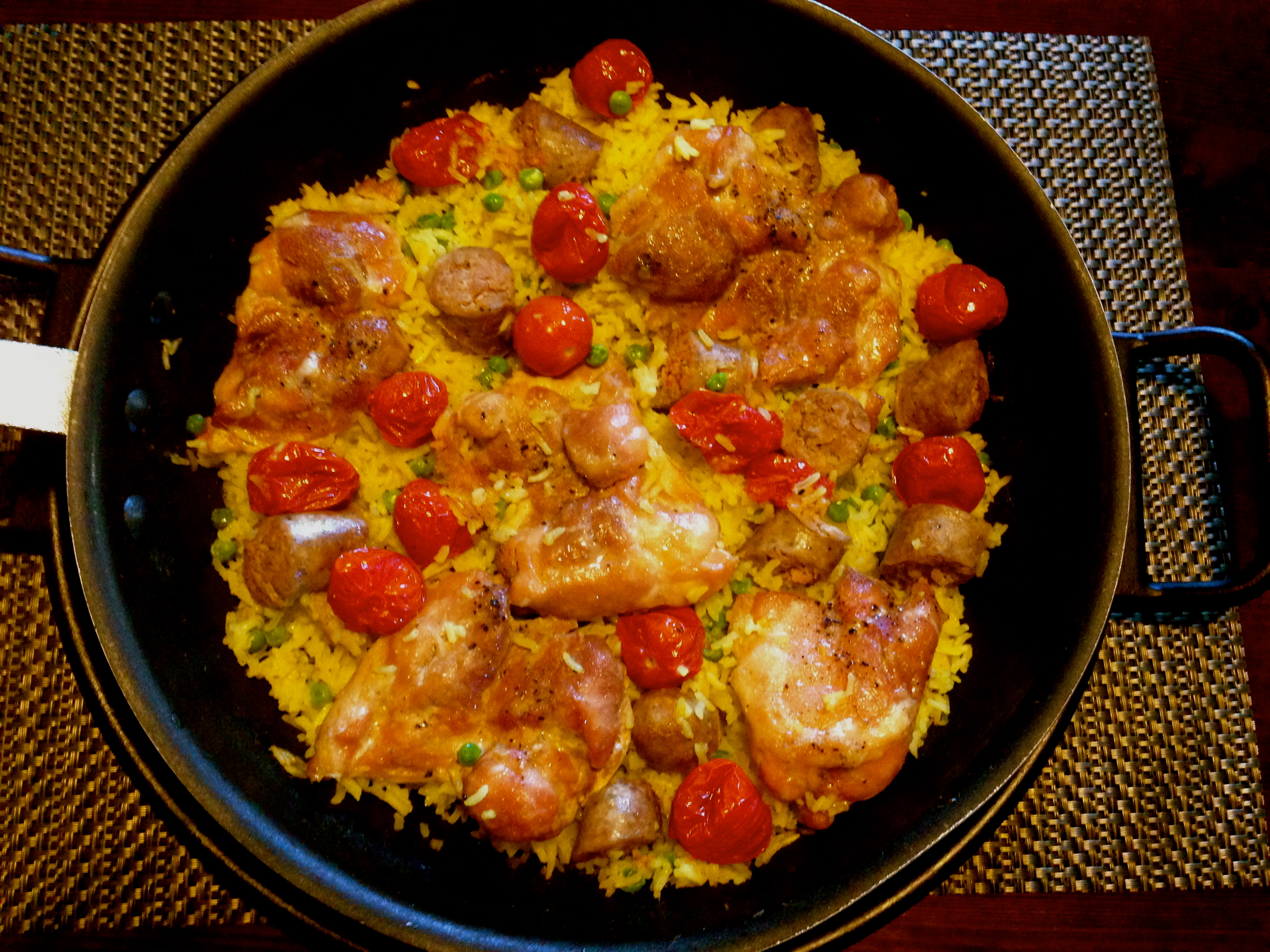
Paella

Paella

I am so excited about this post, not just because I have made paella, one of my favorite dishes but because I have collaborated with a wine expert who graciously paired wine specifically for this dish. I contacted Stefano a certified sommelier and asked him if he would lend his expertise, choosing wine that would compliment the paella. He accepted, and I am so pleased to bring you his choices. Stefano is a brilliant photographer and sommelier and his blog Clicks & Corks recently launched. He previously posted with his wife Francesca on her beautiful blog Flora’s Table. I love their posts, the food, wine and photographs are amazing. I enjoy wine, drinking and cooking with it but I am not an expert, I rely on my local wine merchant to help me pick wine based on what and how I cook and drink. I know what I like but ask me to tell you about it and I become verklempt. Clicks & Corks has a wealth of information regarding wine, there is a glossary full of interesting and helpful information. I sent Stefano what I was making along with the ingredients and based on that he was able to choose 2 wines specifically for this dish. My favorite wine purveyor, Brian who owns Gnarly Vines in Brooklyn did not carry the exact wine that Stefano recommended but went above and beyond for me and found both wines, I was thrilled. Here is a link to the ISA guidelines for wine pairing that was posted on Flora’s table, it’s fascinating. I chose to drink the Soave Classico “Calvarino” with the meal and loved it, this wine paired perfectly with the paella, it’s clean and light and very smooth, there is a minerality that is very distinct, I could tell the soil in which the grapes were grown is rich and produces exceptional grapes. The wine complimented the paella so well, the crisp clean white wine offset the richness of the dish. Stefano knows what he is doing when he chose this wine. I haven’t opened the other wine yet but have no doubt that it will also be amazing. This wine will pair perfectly with seafood also, in my non expert opinion.

This paella is pretty simple, I chose to use chicken thighs and sausage and no seafood, it’s easy to make and isn’t as finicky as paella that contains different types of seafood. I love to drizzle it with aioli, now aioli is traditionally made with raw garlic, oil and an acid. Because I am not a fan of raw garlic I roasted it, used both olive and vegetable oil and added saffron building on the flavors in the paella.

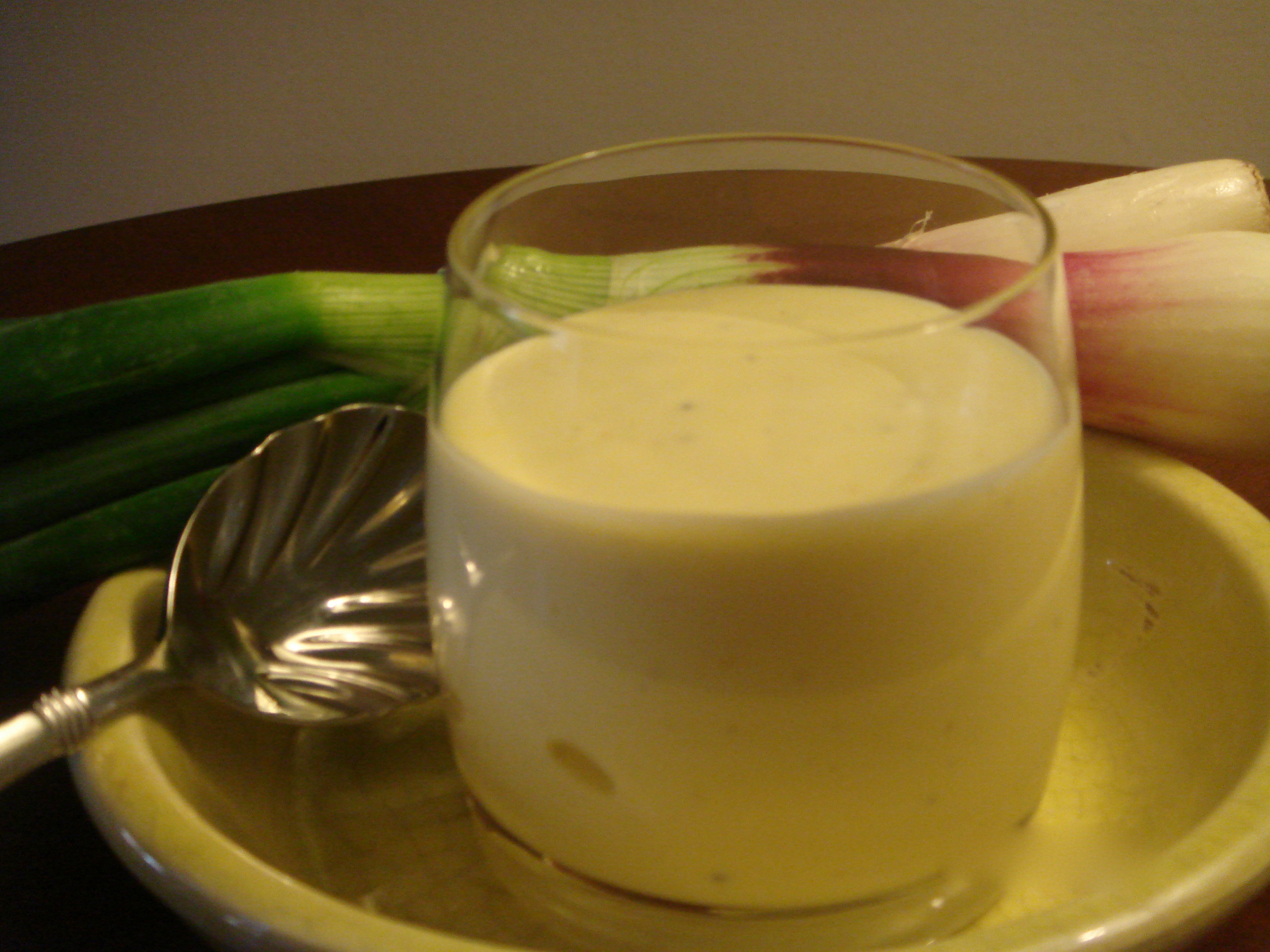
Roasted garlic, saffron,lemon aioli

Roasted garlic, saffron,lemon aioli

The Aioli:

  • 3-4 large cloves of garlic (3 if you want it subtle and 4 for stronger garlic flavor)
  • 1/2 teaspoon Sea Salt
  • 2 Egg yolks
  • 1/4 cup Freshly squeezed lemon juice
  • 1 teaspoon Lemon Zest
  • Freshly ground white or black pepper
  • 1/2 cup Vegetable Oil (Canola works well)minus 2 tbs
  • 1/4 cup + 2 tbs olive oil.
  • A generous pinch of saffron
  1. Preheat your oven to 350 degrees, while oven is heating peel 4 large cloves of garlic place on aluminum foil and drizzle with olive oil and make a packet. Place on sheet pan and bake for 15 minutes or until garlic is soft.
  2. Let garlic cool, while it’s cooling squeeze and zest the lemons. Add the generous pinch of saffron to the lemon juice and let sit for approx. 10-15 minutes the lemon juice will turn a lovely vibrant yellow.
  3. In your blender place the garlic cloves,egg yolks, lemon juice w/saffron, lemon zest, salt and pepper. Blend until garlic is completely incorporated it doesn’t take long as the garlic is soft.
  4. With blender running, slowly add the oil, the mixture will become thick. Adjust seasoning if you desire. Refrigerate while you make the Paella. This can be made in advance it keeps for 2-3 days in refrigerator.

Paella with saffron rice:

  • 3 cups long grain white rice
  • 6 cups chicken stock to cook the rice heated.
  • 1 small sweet onion chopped
  • 2 tablespoons Butter
  • 2 tablespoons Olive Oil + plus more for chicken and tomatoes
  • 6 chicken thighs (bone in and skin on)
  • 1/2 pound Italian sausage (sweet or hot)
  • 1 cup frozen peas
  • 1/14 cup chicken stock for paella
  • A generous pinch of saffron for the rice.
  • 12 cherry or grape tomatoes
  1. First make the saffron rice. Heat the olive oil and butter in large saucepan, add onion and cook until soft and translucent, add the rice and stir to coat. Add the saffron to the heated stock and add to the rice, let it come to a boil, reduce heat, cover pan and let cook for approx. 15 minutes. Remove cover and fluff the rice with a fork. Set the rice aside.
  2. Season the chicken thighs with salt and pepper and place in baking pan, drizzle with olive oil and bake in 450 degree oven for 20 30 minutes. Don’t discard the pan juices, pour some onto the rice when you are putting the paella together.
  3. Reduce oven temp to 375 degree’s, lay a piece of parchment on baking sheet and place tomatoes on parchment, drizzle with olive oil, salt and pepper and bake until tomatoes become soft and start to caramelize. It takes approximately 15- 20 minutes. Remove from oven and set aside.
  4. Heat a fry pan(use the large pan you will use for the paella) coated with a little olive oil and brown the sausages. Remove from the pan and set aside covered. Don’t drain the oil (it won’t be much) or pan juices you will use this same pan to cook the paella). Slice sausage just before assembling the paella.
  5.  If you have a paella pan thats wonderful but if you are like me and do not use a large (14″) fry pan with a lid. Using the same fry pan you used for the sausage, turn flame to medium/high. Add the saffron rice and peas mix to incorporate the peas with the rice, then start layering. Add the chicken thighs and sausage.  Pour the 1 1/4 cups of chicken stock over the paella, spoon some of the pan juices from the chicken on top cover and cook for 15 minutes, approximately 3 minutes before its done add the tomatoes, put the lid back on and cook for the remaining time.  Remove from heat. Garnish with chopped parsley and drizzle with the aioli.
Fantastico!!

Fantastico!!

Wine Pairing:

By Stefano Crosio-Clicks & Corks

In order to pair well with Suzanne’s delicious paella, the wines that we are going to pick need to have good acidity, a good extent of smoothness, quite intense nose-mouth flavors and decent structure, as in a medium to full bodied wine. The reason why these characteristics (and not others) are desirable to achieve a pleasant food-wine pairing is the result of application of the wine pairing criteria codified by the Italian Sommellier Association, which I will discuss in a future post on Flora’s Table.

Based on the above guidelines, I am going to recommend two wines that I have recently tasted at the Vinitaly/Slow Wine trade fair in New York: they both possess the desired characteristics to be good companions to Suzanne’s paella and they both have particularly impressed me when I tasted them. Clearly, these two wines are by no means the only ones that go well with Suzanne’s paella! However, on the one hand their descriptions, coupled with the general guidelines provided above, should point you in the right direction should you wish to consider different alternatives and, on the other hand, if you are going to give either or both of these wines a try, they might introduce some of you to two Italian wines that are maybe not so “mainstream” or widely known in the US market and that yet are excellent and showcase the treasure chest of indigenous grape varieties that constitute the backbone of centuries of Italy’s wine culture.

I will now leave you with my tasting notes for the two recommended wines, plus the certainty that you will enjoy Suzanne’s delicious paella dish and the hope you will get to drink some good wine with it!  🙂
 
Option 1: Soave Classico, from the Veneto region
 
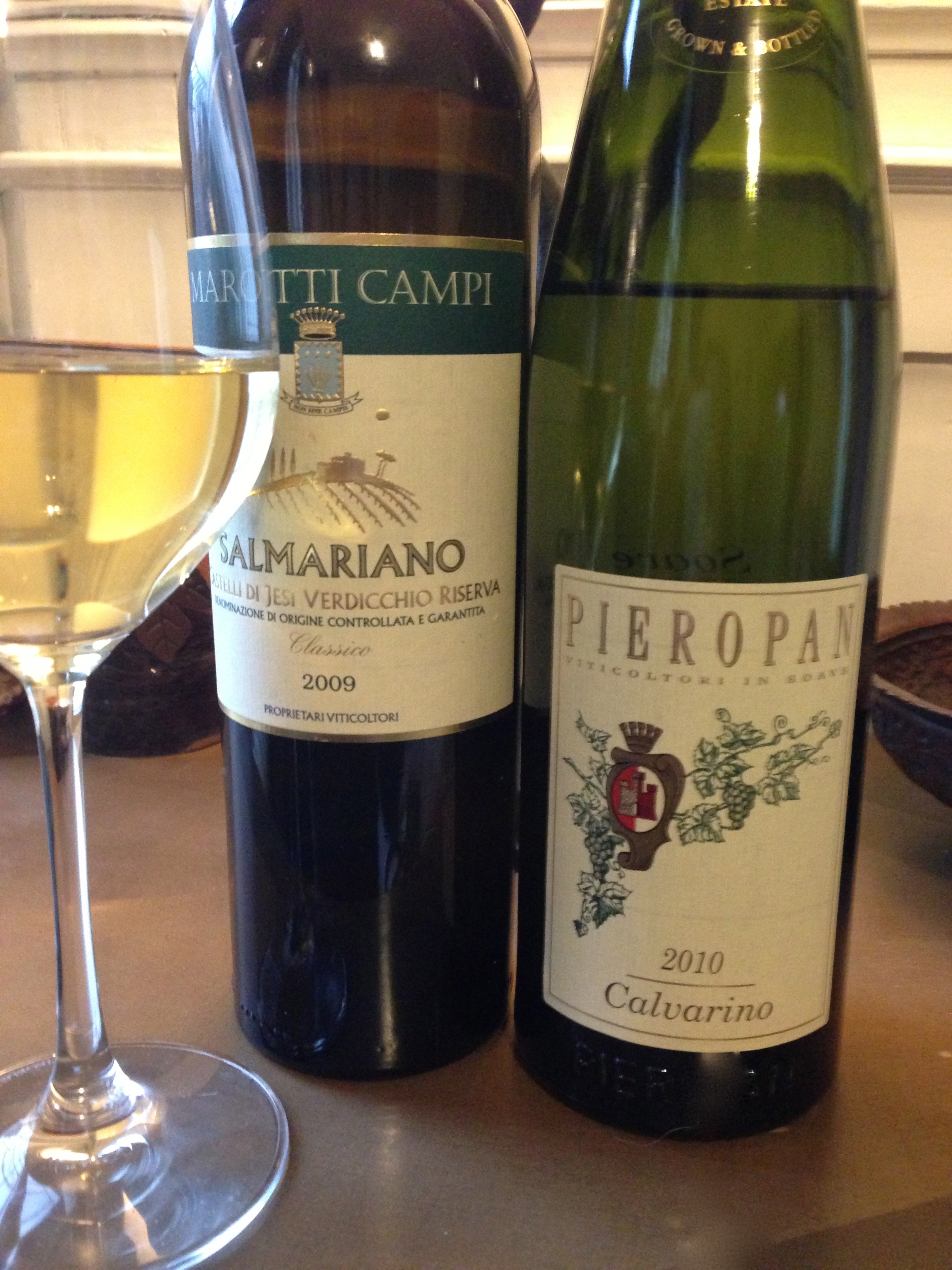
Pieropan [http://www.pieropan.it/en/], Soave Classico “Calvarino” 2010 DOC: a very good Soave made of a blend of 70% Garganega and 30% Trebbiano di Soave grapes which literally hits you in the nose with an exhuberant minerality and aromas of apple, citrus and white flowers; in the mouth a lively acidity and distinct minerality are balanced by a good extent of smoothness – long finish. ABV: 12.5% VOL. If interested, here [http://www.pieropan.it/en/index.php?id=73] is the winery’s technical sheet for this wine. Retails in the US for about $28.
 
Grape varieties’ quick facts: Garganega is a grape variety that is indigenous to the Veneto region, where it has been cultivated since at least the XIII century. Wines made of Garganega grapes are generally acidic and spicy.For more information about the Trebbiano di Soave grape variety, please refer to the quick facts about Verdicchio in option 2 below.
Option 2: Verdicchio dei Castelli di Jesi, from the Marche region
Marotti Campi [http://www.marotticampi.it/index.php?var=], Verdicchio dei Castelli di Jesi Classico “Salmariano” Riserva 2009 DOC: a very good varietal wine made of 100% Verdicchio grapes, with a nice bouquet of white flowers, peach, citrus and minerals; good acidity and a long finish. ABV: 14% VOL. If interested, here [http://www.marotticampi.it/catalogo-vini.php?var=tab7] is the winery’s technical sheet for this wine. Retails in the US for about $20.
 
Grape variety’s quick facts: Verdicchio grapes are also known as Verdicchio Bianco, a grape variety which, although it has been cultivated in the Marche region since the XVI century, was said to originate from Veneto. It is interesting to notice that DNA profiling has confirmed this theory, indicating that Verdicchio as a grape variety is identical to Trebbiano di Soave, a grape variety that is widely planted in Veneto and that we have just come across describing the wine in option 1. Verdicchio wines tend to have marked acidity and good structure.
 

Cupcake Therapy

Cupcakes

Cupcakes

I see so many beautiful cakes and cupcakes I decided I want to start honing my piping skills, I have never been very good at this and want to do better. I will experiment using different tips and techniques. These cupcakes are pretty basic, I used my recipe for white cake and Hershey’s cooked frosting (because it was easy). I love making swiss meringue buttercream frosting but the egg whites and all that butter on a practice run are not really practical. I have a long way to go before my piping skills look effortless. I have Carpal Tunnel Syndrome and had surgery 2 years ago, my right hand is still weak and I still have nerve damage so this is difficult but good therapy.

Makes 24 regular size cupcakes or 12 jumbo
  • 4 large egg whites at room temperature (1/2 cup egg whites)
  • 1 1/2 cup sugar divided
  • 2 1/4 cups cake flour
  • 3 teaspoons  baking powder
  • 1 teaspoon  salt
  • 1/3 cup  + 1 tbs vegetable oil
  • 1 cup whole milk at room temperature + 1 tbs heavy cream
  • 1 1/2 teaspoon pure vanilla extract

Pre-Heat oven to 350 degrees. Place cupcake liners in the cupcake tins

In stand mixer fitted with whisk attachment beat egg whites until frothy, add  1/2 cup sugar, 1 tbs at a time beating after each addition. Continue beating until egg whites are thick and glossy. They should be stiff enough that when the beater or whisk is lifted they stay on the beater and don’t drop off.

In large mixing bowl sift flour, remaining 1 cup sugar and salt. Add the vegetable oil, milk,cream,and vanilla, beat with hand mixer on medium high speed for 2 minutes. Gently fold in the egg whites.

Pour into prepared pans and bake for 15=20 minutes or until lightly browned and cake tester comes out clean. Let cool in pan for 10 minutes and invert onto cooling rack. Cool completely before frosting.

Frosting:

Recipe from Hershey’s

1 stick (4 oz) butter (I used salted)

2/3 cup natural cocoa (I used Hershey’s)

3 cups powdered sugar

1/3 cup milk (divided)

1 tsp vanilla extract

1 tsp orange zest (optional)

Melt butter in saucepan, add the cocoa and powdered sugar and optional orange zest, mix with hand held mixer, add half the milk and vanilla and continue mixing until the frosting is smooth add the rest of the milk if you feel the frosting is too thick. If you are going to pipe the frosting you will need to cool the frosting first, I put in the refrigerator for 1 hour.